When administered by highly trained maxillofacial surgeons in a properly equipped clinical setting, intravenous sedation is an exceptionally safe method for managing anxiety and discomfort. The process involves continuous, real-time monitoring of a patient’s vital signs, ensuring maximum safety while providing profound relaxation throughout the procedure. For those seeking IV sedation for oral surgery in Fairfax, understanding the stringent safety protocols, the physiological benefits, and the typical patient experience can significantly reduce pre-operative anxiety and set the stage for a smooth recovery.
Intravenous sedation has revolutionized the way complex dental procedures are performed, offering a highly effective middle ground between basic local anesthetics and full general anesthesia. By delivering medication directly into the bloodstream, practitioners can control the exact level of relaxation, making it a preferred choice for extensive treatments. For individuals exploring understanding sedation dentistry options in oral surgery, gaining insight into how these medications function provides peace of mind before stepping into the surgical suite.
How Does Intravenous Sedation Work During Dental Operations?
Intravenous sedation involves administering specialized anti-anxiety and sedative medications through a small needle inserted into a vein, typically in the arm or hand. Because the medication enters the bloodstream directly, its effects are felt almost immediately. This allows the specialist to act swiftly and maintain the patient in a steady, comfortable state of deep relaxation.
The Initial Setup and Monitoring
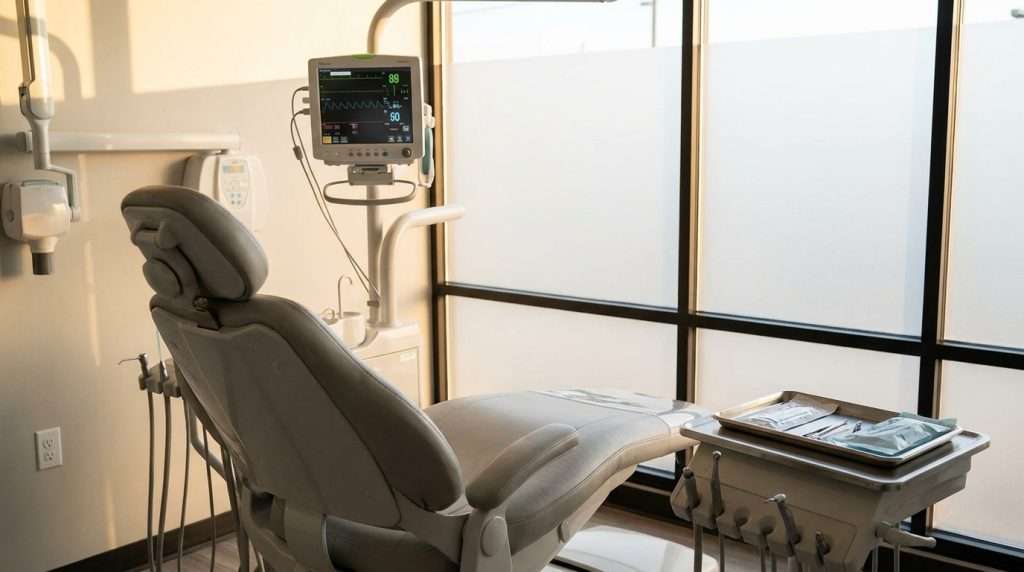
Before any medication is administered, the specialized surgical team meticulously prepares the patient. This preparation involves attaching several advanced monitoring devices. A blood pressure cuff is placed on the arm to take continuous readings, while an electrocardiogram (ECG) monitor tracks the heart’s rhythm and electrical activity. Additionally, a pulse oximeter is placed on a finger to measure blood oxygen levels continuously. This comprehensive monitoring array guarantees that the practitioner is instantly aware of any physiological changes, prioritizing patient safety above all else.
Achieving Deep Relaxation
Once the monitors are active and reading baseline vitals, the sedative is slowly introduced. Patients typically drift into a state of deep tranquility within minutes. Unlike general anesthesia, which renders a person entirely unconscious and often requires breathing assistance, intravenous sedation allows patients to breathe independently. Individuals remain in a twilight state where they can theoretically respond to basic verbal cues, although they usually feel as though they are sleeping peacefully.
Adjustability and Precise Control
One of the most significant medical advantages of this method over oral sedatives is its immediate adjustability. If an individual requires a slightly deeper level of relaxation due to heightened anxiety or a particularly complex surgical phase, the practitioner can incrementally increase the dosage for instant effect. Conversely, the medication can be tapered down just as quickly as the surgery nears completion, jumpstarting the wake-up process before the patient even leaves the chair.
What Are the Benefits of IV Sedation for Oral Surgery in Fairfax?
Choosing this advanced relaxation technique offers a multitude of advantages that go far beyond simple pain management. For individuals dealing with severe dental phobias or those requiring extensive reconstructive work, the benefits are life-changing.
Complete Anxiety and Fear Relief
Dental anxiety prevents countless individuals from seeking necessary medical care, leading to worsening conditions over time. The primary benefit of this technique is the immediate and total alleviation of fear. Patients who normally experience elevated heart rates and panic at the mere thought of dental instruments can undergo hours of complex treatments without any psychological distress. The medication dampens the brain’s fear response, creating a serene, detached experience.
The Amnesia Effect
A highly appreciated characteristic of the medications used is their profound amnestic properties. The vast majority of individuals remember absolutely nothing about their time in the chair. They recall sitting down, having the intravenous line placed, and then suddenly realizing the surgery is complete. This amnesia prevents the formation of traumatic memories, ensuring that future visits to the clinic are not tainted by negative associations.
Suppression of the Gag Reflex
For individuals with a hyperactive gag reflex, simple procedures can be incredibly difficult, and complex surgeries can be nearly impossible to tolerate. Intravenous medication heavily suppresses this reflex. This allows the practitioner to work unhindered in the deepest areas of the mouth, ensuring that surgical instruments, suction devices, and materials do not trigger uncomfortable or dangerous choking sensations.
Improved Surgical Efficiency
When an individual is entirely relaxed, still, and unbothered by the activities occurring in their mouth, the specialist can work much more efficiently. There are no sudden movements to manage, no necessary breaks to let the patient calm down, and no struggles with tense facial muscles. This streamlined environment not only shortens the overall operation time but also enhances the precision and safety of the final result.
Which Procedures Most Commonly Require Deep Relaxation Techniques?
While basic fillings or simple extractions rarely necessitate more than local anesthesia, more invasive procedures heavily rely on deeper relaxation techniques to ensure optimal outcomes and patient comfort.
Complex Wisdom Teeth Extractions
Third molars often become impacted, meaning they grow at incorrect angles or remain trapped beneath the jawbone and gum tissue. Surgical wisdom teeth removal typically involves incising the gums, removing obstructing bone, and sectioning the tooth for safe extraction. Given the invasive nature of this process and the force sometimes required, deep sedation is highly recommended to keep the individual entirely oblivious to the pressure and sounds of the surgery.
Advanced Dental Implants
Replacing missing teeth permanently often involves intricate bone manipulation and precise placement of titanium posts. During the process of receiving dental implants, precision is paramount. For extensive rehabilitations like the All-On-X procedure, where an entire arch of teeth is supported by strategically placed implants, the operation can take several hours. Being completely sedated is essential to endure the length of the appointment without experiencing physical fatigue or stiffness.
Extensive Bone Grafting
When the jawbone lacks the density required to support implants, grafting material must be surgically applied to build up the foundation. This may involve taking bone from another site or placing synthetic materials deep within the ridge. Due to the delicate and sometimes extensive nature of these reconstructions, maintaining a tranquil, motionless patient is vital for surgical success.
How Should Patients Prepare for Anesthesia?
Proper preparation is crucial to prevent complications and ensure the medications work exactly as intended. Practitioners will provide detailed instructions that must be followed strictly.
Strict Dietary Restrictions and Fasting
Individuals must adhere to strict fasting rules prior to their appointment. Typically, this means consuming absolutely no food or opaque liquids for at least eight hours before the scheduled time, adhering strictly to the guidelines before sedation. Clear liquids like water may sometimes be permitted up to a few hours beforehand, but following the specific timeline provided by the clinic is non-negotiable. Fasting prevents the dangerous risk of aspiration, which occurs if stomach contents are regurgitated and enter the lungs while the protective airway reflexes are diminished.
Medication Management
A full review of current medications, supplements, and health conditions must be conducted beforehand. Some daily prescriptions, particularly blood thinners or certain psychiatric medications, may need to be adjusted or temporarily paused. The surgical team will provide explicit instructions on which daily medications should be taken on the morning of the surgery with a small sip of water, and which must be skipped.
Arranging Post-Procedure Transportation
Because the lingering effects of the sedatives cause drowsiness, poor coordination, and delayed reaction times, it is legally and medically required that a responsible adult escort the patient home. Patients are entirely prohibited from driving or operating machinery for at least twenty-four hours after the operation.
What Does the Recovery Process Entail?
Immediately following the operation, patients are moved to a dedicated recovery room where clinical staff continues to monitor their vital signs until the heaviest effects of the medication subside. Upon waking, it is perfectly normal to feel profoundly groggy, confused, and sluggish. The escort will receive all verbal and written post-operative care instructions, as the patient will likely not remember the conversation.
Once home, the rest of the day should be dedicated entirely to resting in a comfortable, elevated position. Hydration is critical, but patients should stick to clear liquids initially, gradually introducing soft, cool foods like applesauce or yogurt as their stomach settles. Strenuous physical activity must be avoided for several days to prevent elevated blood pressure, which can lead to excessive bleeding at the surgical sites. Anyone seeking to transform their smile safely can learn more about these secure surgical pathways by visiting Elevation Oral & Maxillofacial Surgery or by scheduling a consultation with the specialists today.
Frequently Asked Questions
Is intravenous sedation the same as general anesthesia?
No, they are fundamentally different. Intravenous sedation places the patient in a state of deep relaxation where they can still breathe on their own and respond to basic prompts, although they will likely remember nothing. General anesthesia renders the patient completely unconscious and typically requires breathing assistance.
How long does it take for the sedative to completely wear off?
While the deepest effects fade shortly after the medication is stopped, patients typically feel groggy for several hours. It generally takes a full twenty-four hours for the medications to completely leave the system, which is why individuals are advised to rest and avoid driving during this period.
Are there medical conditions that prevent a patient from receiving this type of anesthesia?
Certain severe respiratory conditions, significant cardiovascular diseases, or specific medication interactions can make a patient ineligible for this specific approach. A thorough medical history review is always conducted prior to any appointment to determine the safest approach for the individual.
Will a patient feel any pain while under intravenous sedation?
Patients do not experience pain during the procedure. The sedative provides profound relaxation, and local anesthetics are also administered to completely numb the surgical site. The combination ensures the entire surgical experience remains entirely pain-free.
What are the most common side effects after waking up from the procedure?
The most typical side effects include drowsiness, slight dizziness, and a feeling of heavy limbs immediately upon waking. Some individuals may experience mild nausea, though practitioners often administer anti-nausea medications proactively to minimize this risk.